RF Signal Drops Under Interference Are Often Misdiagnosed
When RF signal drops under interference, most teams make the same diagnosis too early:
The environment is too noisy.
The interference is too strong.
The signal needs more power.
That sounds logical.
It is also why many teams spend weeks changing the wrong thing.
Because in many real deployments, RF signal drops under interference are not caused by external interference alone.
Interference is often only the trigger.
The real weakness is already inside the RF chain.
This is the pattern many engineering teams know too well:
bench testing looks acceptable
nominal output power seems sufficient
the first integration run appears stable
then field performance starts falling apart
Video begins to break up.
Telemetry becomes inconsistent.
Control response becomes less predictable.
Usable range shrinks faster than expected.
The team increases output power again.
The problem still does not go away.
At that point, the real question is no longer:
“Is there interference?”
The real question is:
“What inside the RF chain becomes unstable when interference appears?”
That is the question many teams ask too late.
Why Engineers Overlook the Real Cause
The problem is not that engineers ignore RF fundamentals.
The problem is that the failure path is misleading.
The symptoms look external.
The signal drops under interference.
So the team naturally blames the environment.
But real deployment does not expose only interference.
It exposes the system’s weakest control point.
This is why teams often overlook the real cause:
bench testing creates false confidence
nominal output power hides unstable behavior
early integration success delays deeper diagnosis
the symptoms look like “not enough signal” even when the real issue is loss of control inside the chain
That is why many teams keep adjusting power, replacing amplifiers, and retesting around symptoms, while the real weakness remains untouched.
The Real Cost of Misreading the Problem
This is not just a technical misunderstanding.
It is a project problem.
Once the root cause is misread, teams usually enter a familiar cycle:
They swap amplifiers.
They increase output power.
They repeat tests.
They retune around symptoms.
They spend more integration time.
And they still do not get predictable field performance.
That costs more than RF efficiency.
It costs:
test time
deployment confidence
engineering bandwidth
system stability
project momentum
In other words, the signal drop is only the visible symptom.
The deeper cost is that the team keeps reacting to what it can see, while the real control problem inside the system remains unresolved.
That is why interference should not be treated as the full explanation.
In many systems, it is only the condition that reveals what was already fragile.
Why Bench Results Often Fail to Predict Field Results
A system can look stable on the bench and still fail in real deployment.
That happens because the bench is controlled.
The field is not.
On the bench, runtime is shorter.
Thermal buildup is lower.
Reflections are easier to manage.
Signal paths are simpler.
The receive side often sees less stress.
Everything appears more stable than it really is.
In actual operation, several variables hit the RF chain at the same time:
stronger RF pressure
more reflections
more thermal accumulation
more front-end stress
more variation across the signal path
That is when hidden weaknesses begin to show themselves.
A UAV communication link may look stable during short indoor testing, then begin degrading after a longer outdoor mission.
A portable RF system may behave well at startup, then lose consistency after thermal load rises.
An integrated platform may pass module-level checks, then show unstable link behavior once power delivery, shielding, antenna behavior, and signal routing all interact together.
This is why many RF systems do not fail immediately.
They become less controllable first.
And that gradual loss of control is exactly what many teams mislabel as “interference only.”

1. Receiver Front-End Overload
One of the most overlooked causes of RF signal drops under interference is receiver front-end overload.
When interference rises, many teams focus almost entirely on transmit power.
But the receive side may already be under too much stress.
Once the receiver front end is pushed beyond its comfortable range, the system may start losing usable sensitivity before it loses signal completely.
That does not always look dramatic.
More often, it looks like this:
unstable decoding
fragmented video
inconsistent telemetry
reduced control confidence
link quality that feels unpredictable rather than simply weak
This is where many teams make the wrong move.
They see communication instability and respond by adding more power.
But if the receive chain is already overloaded, more transmit power may not restore control.
In some cases, it makes the overall behavior even harder to predict.
So the real question is not just whether the transmitted signal is strong enough.
It is whether the receiver can still behave predictably under pressure.
If the receive side is already losing control, higher output alone will not solve the real problem.
2. Gain Compression Under Real Operating Stress
Another common cause engineers overlook is gain compression.
On paper, the amplifier may still appear to be operating within range.
In real deployment, that assumption can collapse much earlier than expected.
Interference, reflections, load variation, and system stress can push the amplifier closer to its nonlinear region faster than the team realizes.
When that happens, the system may still be on, but real link quality starts degrading:
control margin becomes smaller
communication becomes less clean
usable stability drops faster than expected
field performance no longer matches the nominal output rating
This creates one of the most frustrating situations in RF integration:
The amplifier is technically working.
Rated output still looks acceptable.
But the link still behaves badly.
That is because stable communication is not defined by output power alone.
It depends on whether the amplifier remains predictable when the environment stops being forgiving.
If compression starts earlier in real stress conditions than expected, then the system is already closer to instability than the spec sheet suggests.
3. Thermal Drift Over Time
Some RF systems fail fast.
Others fail after they warm up.
Thermal drift is one of the most common reasons performance changes over time, especially when interference and runtime stress are both present.
A system may look stable in the first few minutes.
The first test run may appear acceptable.
Then the behavior starts changing.
Range drops.
Link consistency weakens.
Performance begins to vary from one run to the next.
A setup that passed earlier no longer behaves the same way later.
That usually means the problem is no longer just external RF pressure.
It may be that temperature is changing how the RF chain behaves over runtime.
This matters because many teams still treat thermal behavior as a secondary issue.
In real deployment, it often decides whether the system remains usable after the initial test window.
If a system only behaves well when it is cool, briefly tested, and lightly stressed, then it is not truly stable.
A system that only works when conditions are clean is not a stable system.
Thermal stability is not an extra advantage.
It is part of whether the link can be trusted at all.
4. Antenna Mismatch and Reflections
Interference does not degrade performance in isolation.
It interacts with everything else already happening in the chain.
If antenna matching is poor, or reflections are already present, a harsher RF environment will expose that weakness much faster.
What looked acceptable in controlled testing may become unstable once the load becomes less forgiving.
This is one reason short lab validation often creates false confidence.
The system seems functional.
The chain appears operational.
Power is present.
Nothing looks obviously broken.
Then real deployment begins, and inconsistency starts to appear.
Mismatch and reflected energy do not just reduce efficiency.
They also make amplifier behavior harder to predict over longer runtime and under variable conditions.
So in many cases, interference is not the root cause.
It is simply the condition that exposes a matching problem that should have been addressed earlier.
When teams keep treating the result as “external interference,” they often miss the internal instability that was already building inside the chain.
5. System-Level Integration Errors
This is often the most expensive cause of all.
Many teams assume that if communication drops under interference, the answer must be a better amplifier.
But very often, the real issue is system-level integration:
gain staging is misaligned
module choice does not match deployment reality
shielding is insufficient
power delivery affects RF consistency
receive and transmit paths are not balanced properly
the amplifier is treated as a standalone fix instead of one control point inside the full chain
This is where projects get trapped in repeated test cycles.
The team keeps changing parts.
The symptoms keep shifting.
The project keeps slowing down.
Because the real problem is not one isolated component.
It is that the full RF chain is no longer predictable under stress.
A stronger amplifier cannot automatically fix a system that is unstable at the architecture level.
The Core Mistake: Treating Interference as the Whole Story
The biggest mistake is not overlooking one single parameter.
The biggest mistake is assuming that interference explains everything.
In reality, interference often reveals deeper weaknesses that were already there:
insufficient overload margin
earlier-than-expected compression
thermal instability over runtime
mismatch and reflection problems
weak system-level integration
That is why “add more power” so often fails as a long-term fix.
It treats the symptom.
It does not restore control.
Interference is often the trigger, not the root cause.
And once a system becomes hard to control, more output alone rarely brings back true stability.
What Engineering Teams Should Check Before Changing the Amplifier Again
Before increasing power or replacing the amplifier, teams should stop and check:
whether the receiver front end is already being overloaded
whether gain compression appears earlier in real operating conditions than expected
whether thermal drift changes behavior over runtime
whether mismatch and reflections are degrading consistency
whether the actual failure comes from system-level integration rather than amplifier output alone
If these questions are not answered first, changing the amplifier may only restart the same problem in a different form.
That is why some teams feel they are making progress, yet the link never becomes truly dependable.
They are changing hardware before restoring system control.
Stable RF Performance Is About Control, Not Just Power
In contested environments, the real goal is not simply stronger transmission.
The real goal is predictable RF behavior under stress.
That is the difference between a system that looks acceptable in a spec sheet and a system that keeps working when deployment conditions stop being ideal.
If your team is still trying to solve RF signal drops under interference by only adding power, there is a good chance the wrong problem is being fixed.
And the longer that assumption continues, the more time gets lost in repeated testing, delayed integration, and unstable deployment performance.
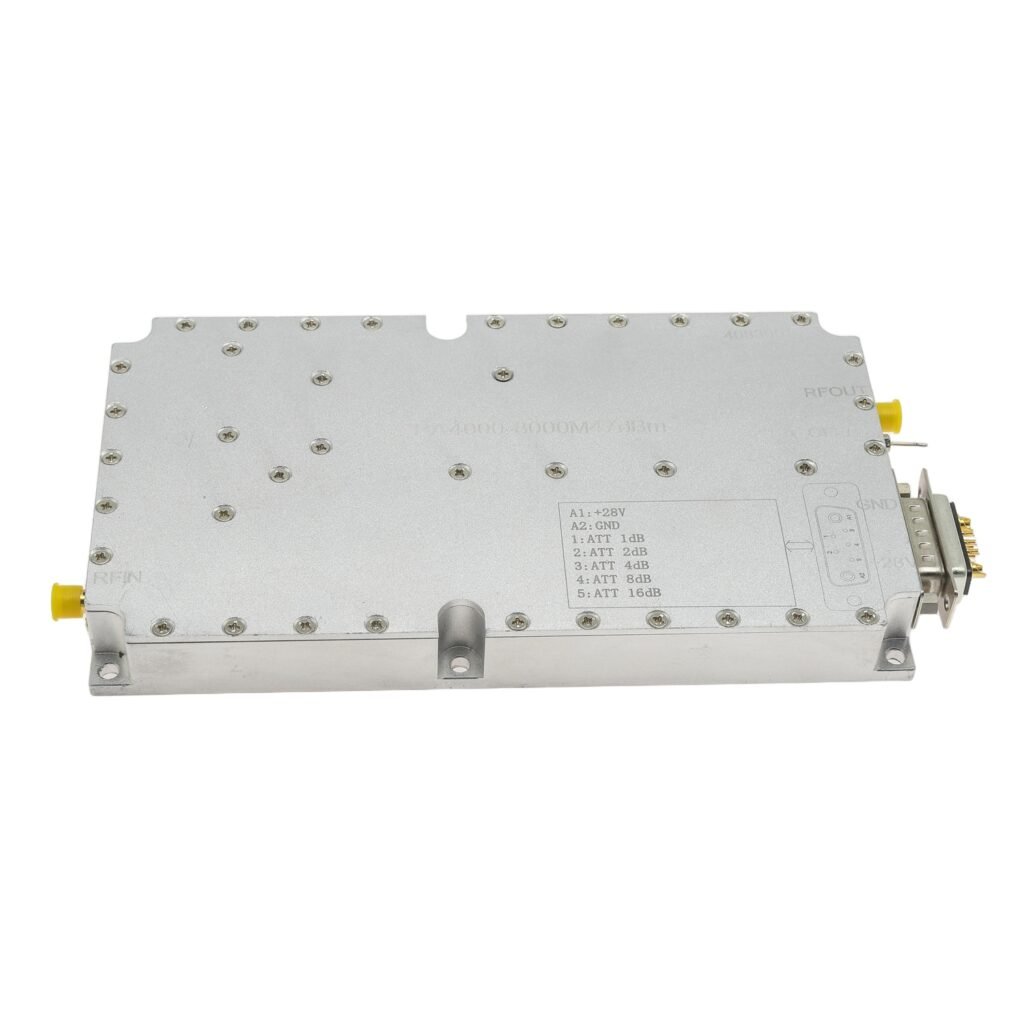
Need Help Reviewing Your RF Chain?
If your system looks acceptable on the bench but becomes unstable in real deployment, the issue may not be interference alone.
It may be overload, compression, thermal drift, mismatch, or integration failure already inside the RF chain.
Before changing the amplifier again, review the full system behavior first.
Send your parameters before your next amplifier change if you want a direct review of your frequency range, output target, runtime condition, and deployment setup.
Request checklist if you want a practical RF troubleshooting and amplifier selection checklist for UAV, anti-drone, or integrated RF systems.
 Chat with us on Telegram
