Choosing RF power amplifier output power is one of the most common decisions in UAV communication, anti-drone systems, and RF integration projects.
It is also one of the easiest decisions to get wrong.
Many teams begin with a simple question:
Should we use 10W, 30W, 50W, or 100W?
But in real RF system design, this question cannot be answered by wattage alone.
A higher-power RF amplifier does not automatically create a more stable link. In some systems, it can increase thermal load, stress the power supply, create integration challenges, and expose weaknesses in the RF chain.
The real question is not:
“How much power can we add?”
The real question is:
“What level of RF power can the full system control, cool, supply, and use effectively?”

Why Choosing RF Power Amplifier by Wattage Alone Is Risky
In many RF projects, output power becomes the first number people compare.
10W looks basic.
30W looks stronger.
50W looks safer.
100W looks more professional.
But this is a dangerous way to evaluate RF amplifiers.
Because the amplifier does not work alone.
It works inside a complete RF chain, including:
• signal source
• RF amplifier
• filter
• cable
• connector
• antenna
• power supply
• heat dissipation structure
• control interface
• platform environment
If any part of this chain is poorly matched, more power may not solve the problem.
It may make the problem harder to control.
When a 10W RF Amplifier Makes Sense
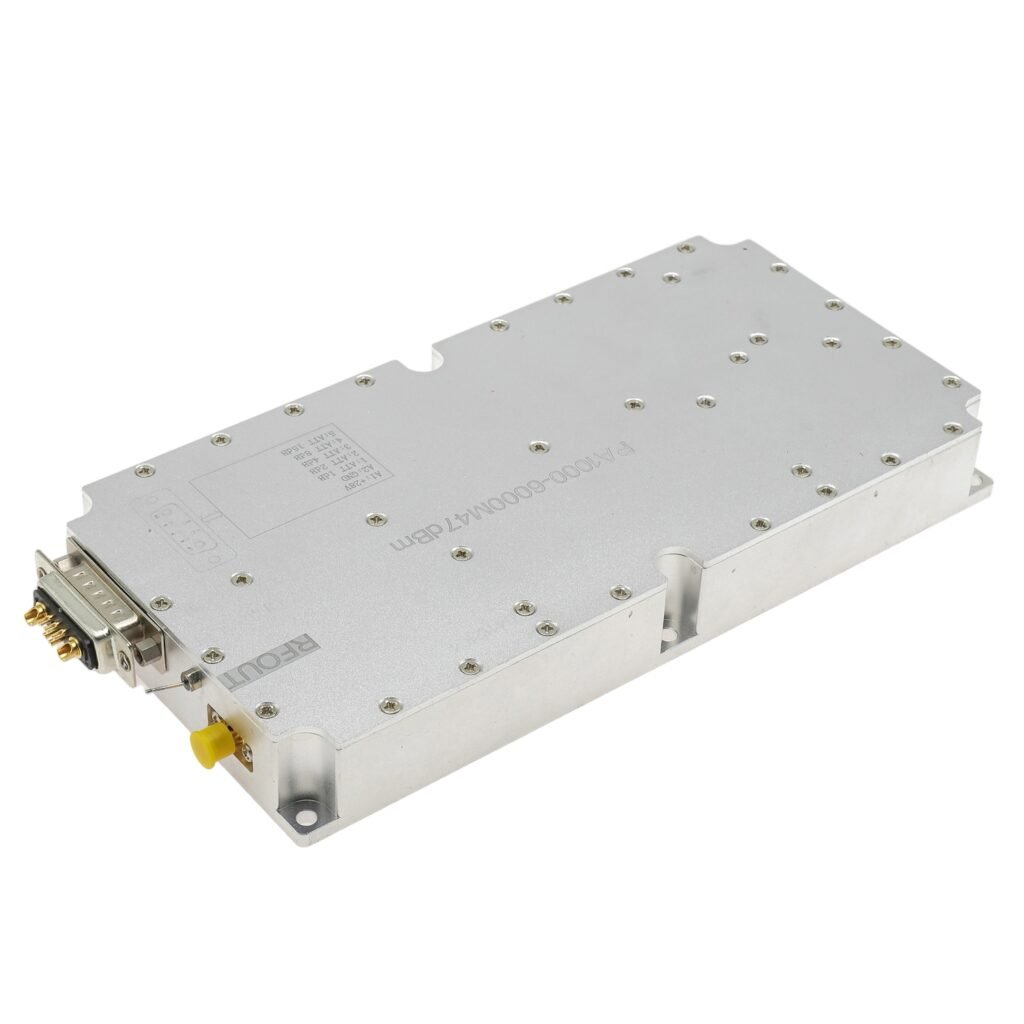
A 10W RF amplifier is often suitable for compact systems, short-to-medium range communication, portable devices, lightweight platforms, and applications where power consumption and heat control are more important than maximum output.
For small UAV platforms or compact RF modules, 10W can be a practical choice when the system requires moderate signal support without adding too much thermal or electrical burden.
The advantage of 10W is not only lower power.
It is easier integration.
A 10W RF amplifier usually creates less heat, requires less current, and is easier to fit into space-limited platforms.
But 10W is not suitable when the system needs higher link margin, longer coverage, stronger signal penetration, or more demanding operating conditions.
A 10W amplifier is usually selected when the system priority is:
compact size, lower heat, easier power supply, and basic RF enhancement.
When a 30W RF Amplifier Is the Better Balance
A 30W RF amplifier is often the practical middle point for many UAV communication and RF integration systems.
It provides stronger output than 10W without immediately moving into the heavier thermal and power supply requirements of 50W or 100W systems.
For many engineering teams, 30W is the first level where the system begins to gain meaningful additional link margin while still remaining relatively manageable in size, heat, and integration complexity.
This makes 30W suitable for:
medium-range UAV communication systems, portable RF devices, compact anti-drone modules, and integration projects where power, size, and reliability must stay balanced.
The key value of 30W is balance.
It can provide stronger RF output while still remaining practical for many field-deployable systems.
But the system still needs proper antenna matching, stable DC input, heat dissipation, and connector control.
A 30W RF amplifier is usually selected when the system needs:
more link margin than 10W, but still needs manageable size, heat, and integration difficulty.
When a 50W RF Amplifier Becomes Necessary
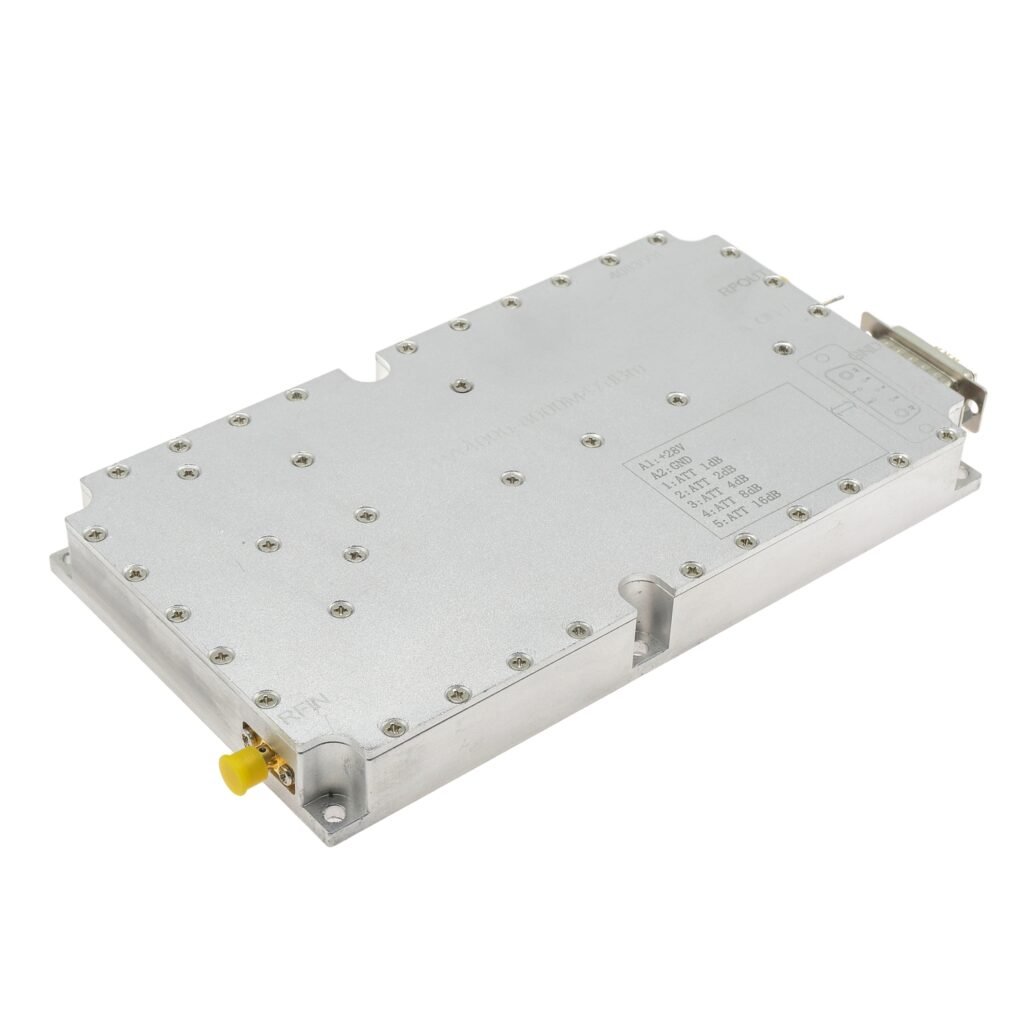
A 50W RF amplifier is usually selected when the system requires stronger field performance, longer operational distance, or higher signal margin under more demanding conditions.
At this level, RF power becomes more serious.
The amplifier may deliver stronger output, but the system must also handle more heat, more current, and greater integration sensitivity.
This is where many teams start to make mistakes.
They choose 50W because the system feels unstable.
But instability may not be caused by insufficient power.
It may come from:
gain mismatch, poor antenna matching, cable loss, connector reflection, thermal drift, or power supply instability.
If these problems are not solved, a 50W amplifier may only push more energy into a weak RF chain.
That is why 50W selection must be based on system-level analysis, not just a desire for stronger output.
A 50W RF amplifier is usually suitable for:
longer-range UAV communication, stronger anti-drone signal chains, fixed or semi-fixed RF systems, and projects where thermal design and power supply are already planned.
The key question before choosing 50W is:
Can the system support the amplifier continuously, not just power it on for a short test?
When a 100W RF Amplifier Is the Right Choice
A 100W RF amplifier is not a general upgrade.
It is a system-level power unit.
It is usually suitable for fixed installations, vehicle-mounted platforms, high-power anti-drone systems, long-range RF links, and projects where the system has enough space, cooling capacity, power supply margin, and structural design to support high output power.
At 100W, the RF amplifier is no longer just a module.
It becomes a major part of the system architecture.
The integration team must consider:
power supply stability, heat dissipation, enclosure design, antenna handling capacity, RF safety margin, cable loss, connector quality, duty cycle, and long-duration operation.
A 100W RF amplifier may deliver strong output, but it also demands stronger engineering discipline.
If the platform cannot handle the heat, current, or RF chain requirements, 100W may create more risk than value.
A 100W RF amplifier is usually selected when the system needs:
high output power, fixed or vehicle-mounted deployment, stronger link margin, and enough system capacity to support long-duration operation.
The Real Difference Between 10W, 30W, 50W, and 100W
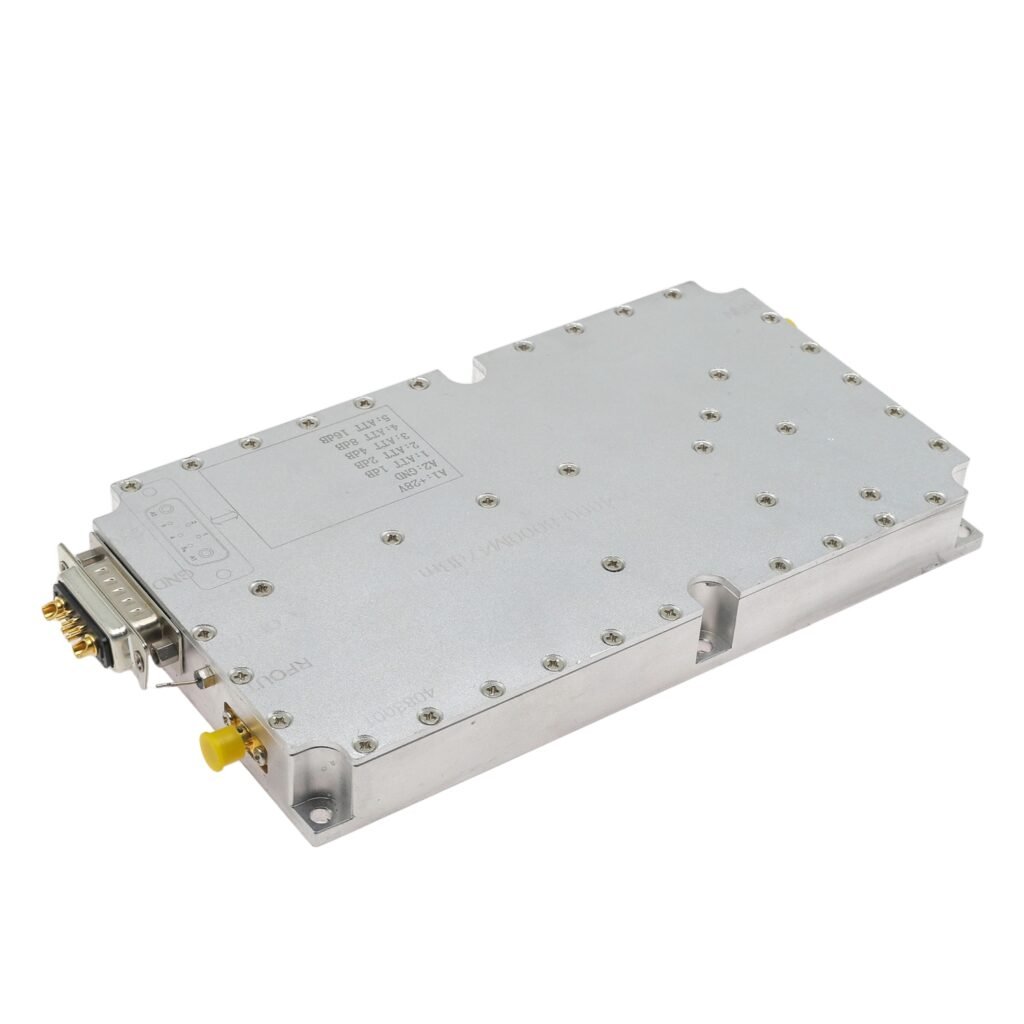
The difference is not only output power.
The real difference is system burden.
As power increases, the amplifier usually requires:
more current, better cooling, stronger structure, better antenna matching, more careful integration, and more serious field validation.
That means the correct RF amplifier is not always the highest-power option.
The correct RF amplifier is the one that matches the mission requirement and the system’s ability to support it.
For some compact UAV systems, 10W or 30W may be more realistic.
For stronger communication or anti-drone systems, 50W may be necessary.
For fixed, vehicle-mounted, or high-power projects, 100W may be the right level.
But each decision depends on the full RF chain.
Questions to Answer Before Choosing RF Power Amplifier Output Power
Before selecting between 10W, 30W, 50W, and 100W, engineering teams should define several key parameters.
What frequency band does the system use?
What communication or signal range is required?
What antenna gain is available?
What is the acceptable power consumption?
How much cooling space is available?
Will the system operate continuously or intermittently?
Is the platform handheld, UAV-mounted, vehicle-mounted, or fixed?
What are the cable length and connector losses?
What is the expected operating temperature?
What level of integration support is available?
Without these answers, choosing RF power amplifier output power becomes guesswork.
And guesswork is expensive in RF systems.
Why Linkaris Focuses on System-Level RFPA Selection
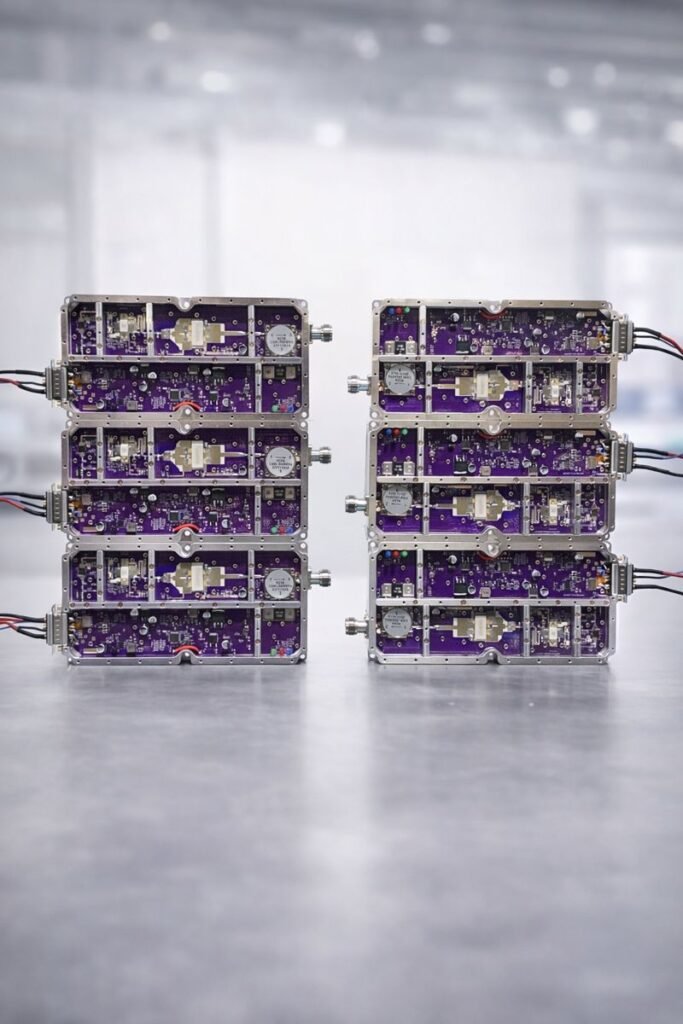
At Linkaris, RF amplifier selection is not treated as a wattage comparison.
We evaluate RFPA selection based on the full application environment, including frequency band, output power, platform type, antenna configuration, thermal design, power supply, and integration requirements.
Our RF power amplifier options cover multiple power levels, including 10W, 30W, 50W, and 100W, across typical RF bands used in UAV communication, anti-drone systems, and RF integration projects.
The goal is not to push the highest-power amplifier.
The goal is to help the system become more stable, predictable, and suitable for real deployment.
Because in RF systems, the best amplifier is not always the strongest one.
It is the one the system can actually control.

Final Thought
Choosing RF power amplifier output power is not a simple wattage decision.
10W, 30W, 50W, and 100W each solve different types of problems.
10W is suitable for compact and lower-burden systems.
30W is often the balanced choice for practical integration.
50W supports stronger field requirements but needs better thermal and power design.
100W is a system-level option for high-power, fixed, or vehicle-mounted applications.
The wrong question is:
“Which amplifier has the highest output?”
The better question is:
“Which amplifier gives our system enough margin without creating new instability?”
If you are selecting an RF amplifier for UAV communication, anti-drone systems, or RF integration projects, send us your frequency band, target range, platform type, antenna setup, and power supply conditions.
Linkaris can help evaluate which power level is more suitable before you commit to the wrong RFPA design.
 Chat with us on Telegram
