When an RF communication link becomes unstable, many engineering teams make the same first decision:
increase the RF power.
If the control link becomes shorter, they look for a higher-power amplifier.
If the video signal becomes unstable, they assume the signal is not strong enough.
If the system performs differently in the field than on the bench, they often believe more output power will create more margin.
This reaction is understandable.
But in many UAV, anti-drone, and RF communication systems, communication instability is not caused by insufficient power alone.
In some cases, increasing RF power does not solve the problem.
It only increases the stress on an already unstable RF chain.
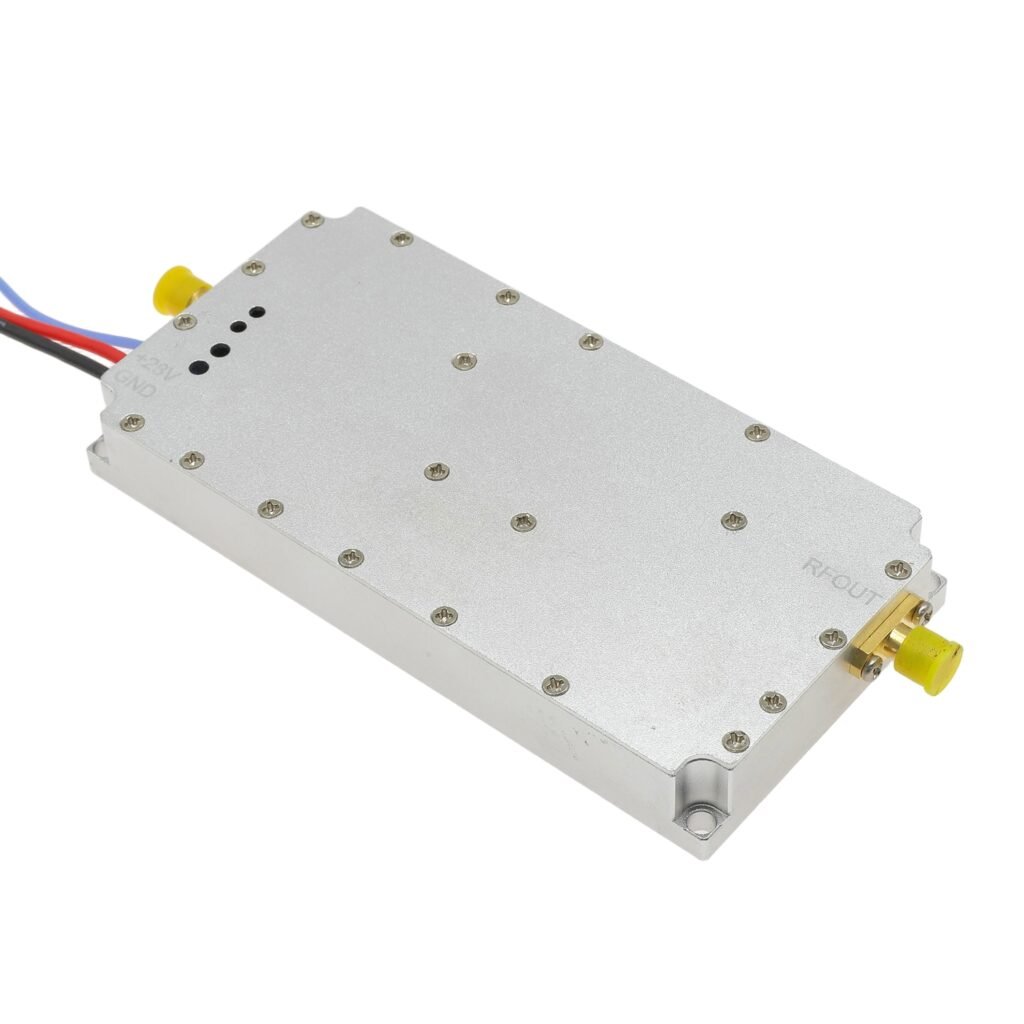
The Real Problem May Not Be Power
A higher-power RF amplifier can increase output level.
But communication stability depends on more than output power.
It also depends on whether the whole RF chain remains controlled under real operating conditions.
That includes:
• power supply stability
• amplifier gain behavior
• thermal performance
• antenna and cable matching
• reflected power control
• receiver-side protection
• filtering
• mechanical layout
• long-duration operation
If any of these areas are weak, the system may still become unstable even after using a higher-power amplifier.
This is why some projects face the same problem repeatedly:
The team increases power.
The bench result looks better.
But field stability still does not improve as expected.
The problem was never only about wattage.
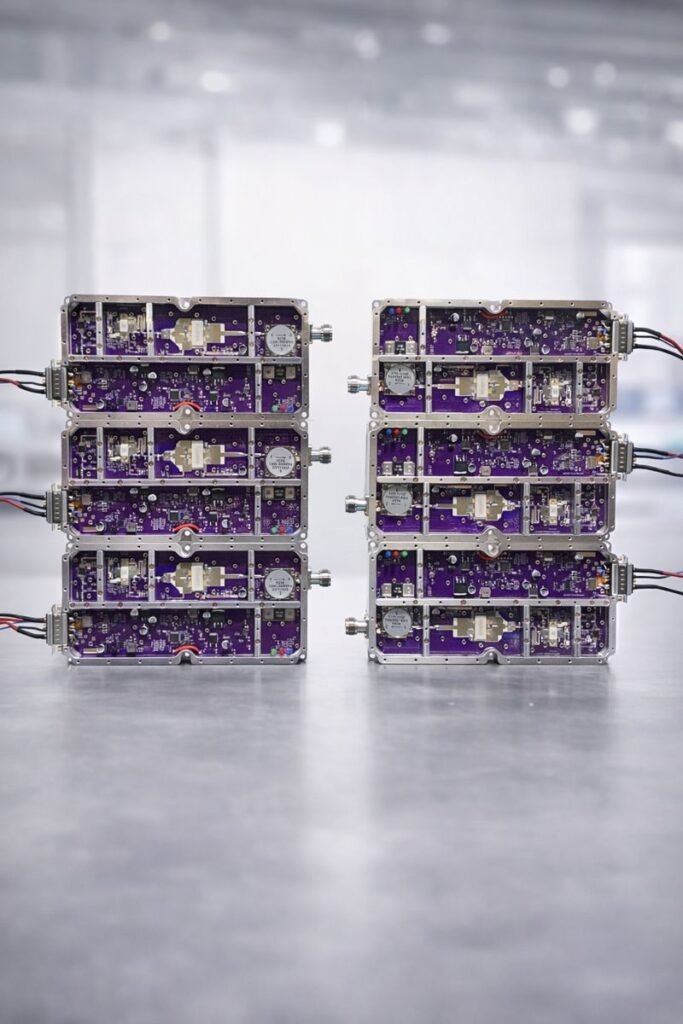
Why Bench Tests Can Be Misleading
On the bench, RF systems often look stable.
The power supply is controlled.
The test time is short.
The antenna condition is predictable.
The cable length is fixed.
The environment is clean.
But in real deployment, the situation changes.
A UAV or integrated RF platform may face:
• battery voltage drop during operation
• temperature rise after long runtime
• vibration at connectors
• installation differences
• nearby RF modules
• antenna position changes
• cable loss
• impedance mismatch
• field interference
These factors may not immediately destroy the link.
Instead, they make the system less predictable.
The link may work for several minutes, then become unstable.
It may work in one test, then behave differently in another.
It may pass basic output testing, but fail after real integration.
This is the part many teams underestimate.
RF systems often fail gradually before they fail completely.
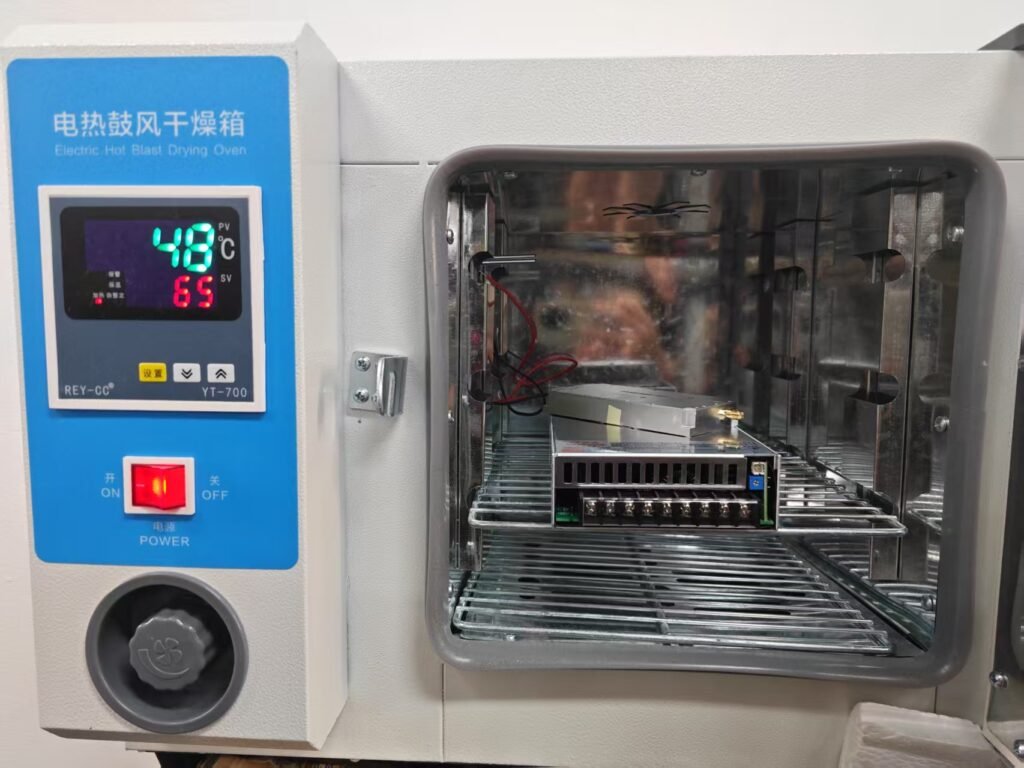
More Power Also Means More Stress
Higher RF power is not free.
It usually means more heat, more current demand, and more pressure on the amplifier, power supply, and thermal design.
If the thermal structure is not sufficient, the amplifier may not maintain consistent behavior during long operation.
If the power supply cannot support the load properly, the output may fluctuate.
If the antenna or cable matching is poor, reflected power may increase stress on the amplifier.
If filtering, isolation, or layout is not properly controlled, stronger RF output may create more internal interference inside the system.
So more power can sometimes expose hidden weaknesses faster.
The system may look stronger on paper.
But in the field, it may become harder to control.

Receiver-Side Stability Is Often Ignored
Many teams focus only on the transmit side.
They ask:
“How much output power do we need?”
But stable communication also depends on the receive side.
A receiver must still be able to identify the useful signal clearly.
If the receiver path is affected by overload, poor filtering, internal coupling, or nearby high-power RF energy, the link may become unstable even when the transmitter is stronger.
This is especially important in compact UAV and anti-drone systems, where antennas, RF modules, power lines, and control boards may be placed close together.
In this situation, increasing transmit power alone may not improve communication quality.
It may even make the system-level problem more obvious.
The Customer’s Real Problem Is Not “Low Power”
For many engineering teams, the real pain is not that the amplifier number is too small.
The real pain is:
The system behaves differently after integration.
The field result does not match the bench result.
The problem appears randomly.
The team cannot quickly locate the root cause.
The project timeline gets delayed.
The customer starts questioning the whole system design.
This is why communication stability must be evaluated as a system issue.
A higher-power amplifier may be necessary in some projects.
But it should not be used as the first answer to every instability problem.
Before increasing power, the team should ask:
Is the RF chain stable enough to handle more power?
What Should Be Checked Before Increasing RF Power?
Before moving to a higher-power RF amplifier, engineering teams should review several basic areas.
1. Power Supply
Can the system maintain stable voltage and current under real load?
If the power supply drops, fluctuates, or creates noise under high current demand, RF output behavior may become unstable.
2. Thermal Design
Can the amplifier maintain stable operation during long runtime?
Heat accumulation can affect system behavior, especially in compact platforms with limited cooling space.
3. Impedance Matching
Are the amplifier, cable, connector, and antenna properly matched?
Poor matching may cause reflected power and reduce system reliability.
4. Receiver Protection
Is the receiver side protected from overload, internal coupling, and unnecessary RF noise?
A stronger transmitter does not help if the receiver path becomes less clean.
5. System Layout
Are RF modules, antennas, cables, power lines, and control boards arranged in a way that reduces interference and coupling?
In compact platforms, layout problems can easily become communication problems.
The Better Question
Instead of asking only:
“How much RF power do we need?”
A better engineering question is:
“Can the whole RF chain remain predictable under real operating conditions?”
This question is more important because real communication stability depends on control.
Not only output power.
A stable RF system should maintain predictable behavior across:
• frequency range
• output power
• temperature
• power supply condition
• antenna matching
• receiver performance
• installation environment
• long-duration operation
This is what separates a working amplifier from a reliable RF system.
Final Thought
Increasing RF power can help in some cases.
But it does not automatically fix communication stability.
If the real problem comes from power supply fluctuation, thermal stress, impedance mismatch, receiver-side overload, or poor system integration, higher power may not solve the issue.
It may only make the system more difficult to control.
For UAV, anti-drone, and integrated RF platforms, the goal should not be maximum power alone.
The goal should be predictable RF chain behavior under real deployment conditions.
Because in the field, communication stability is not decided by one power number.
It is decided by whether the whole system remains controlled when conditions change.
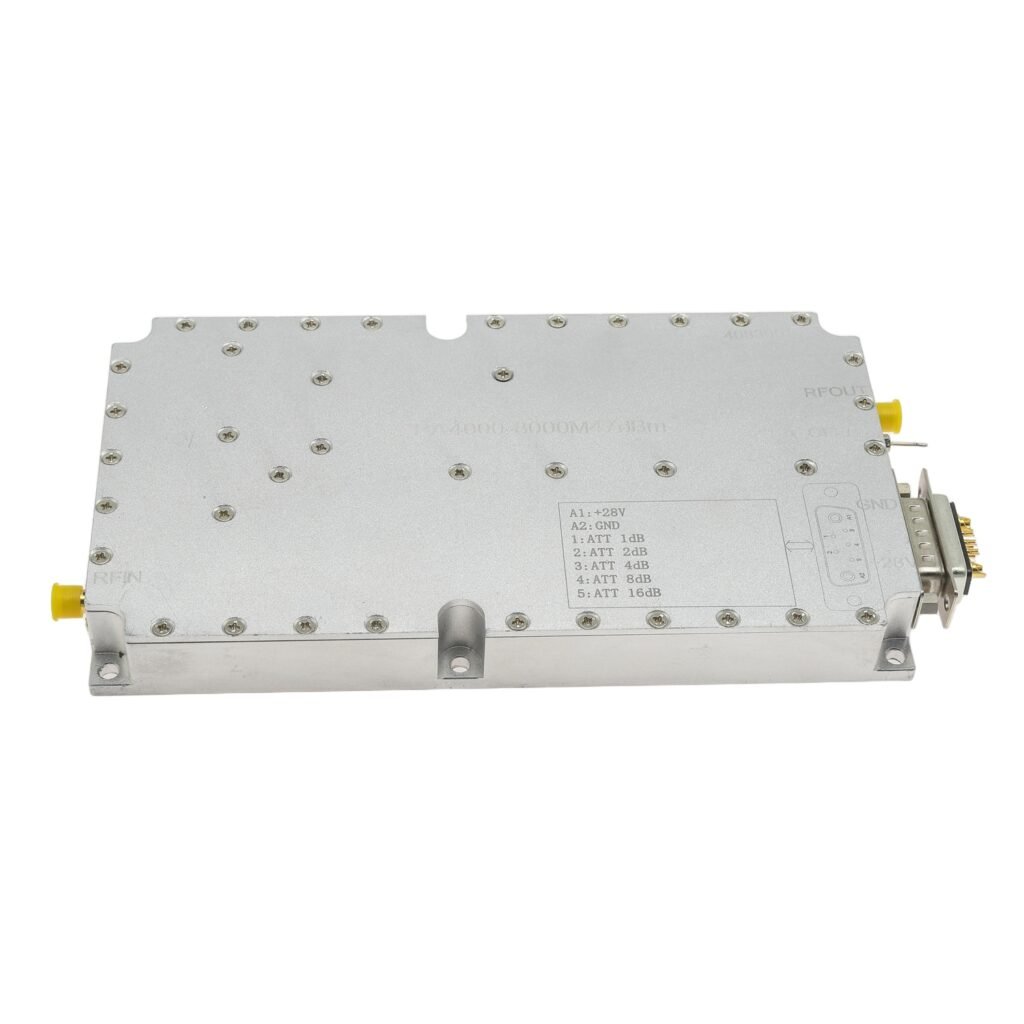
If your RF system works on the bench but becomes unstable after field deployment, the issue may not be output power alone.
Send us your basic parameters:
• frequency range
• required output power
• platform type
• power supply condition
• antenna setup
• working environment
• current instability symptom
We can help review whether your problem is really power-related, or whether another part of the RF chain is limiting communication stability.
 Chat with us on Telegram
